 By
ByDentists get more patients from Google by ranking in local map results, keeping a complete Google Business Profile, collecting consistent patient reviews, publishing procedure-specific content, and running targeted local ads. Most patients search for a dentist only when they need one, so visibility at that exact moment decides which practice gets the call.
I have worked with healthcare and local service businesses on SEO and content strategy. Here I break down the exact steps a dental practice should take to attract more patients through Google, both organic and paid.
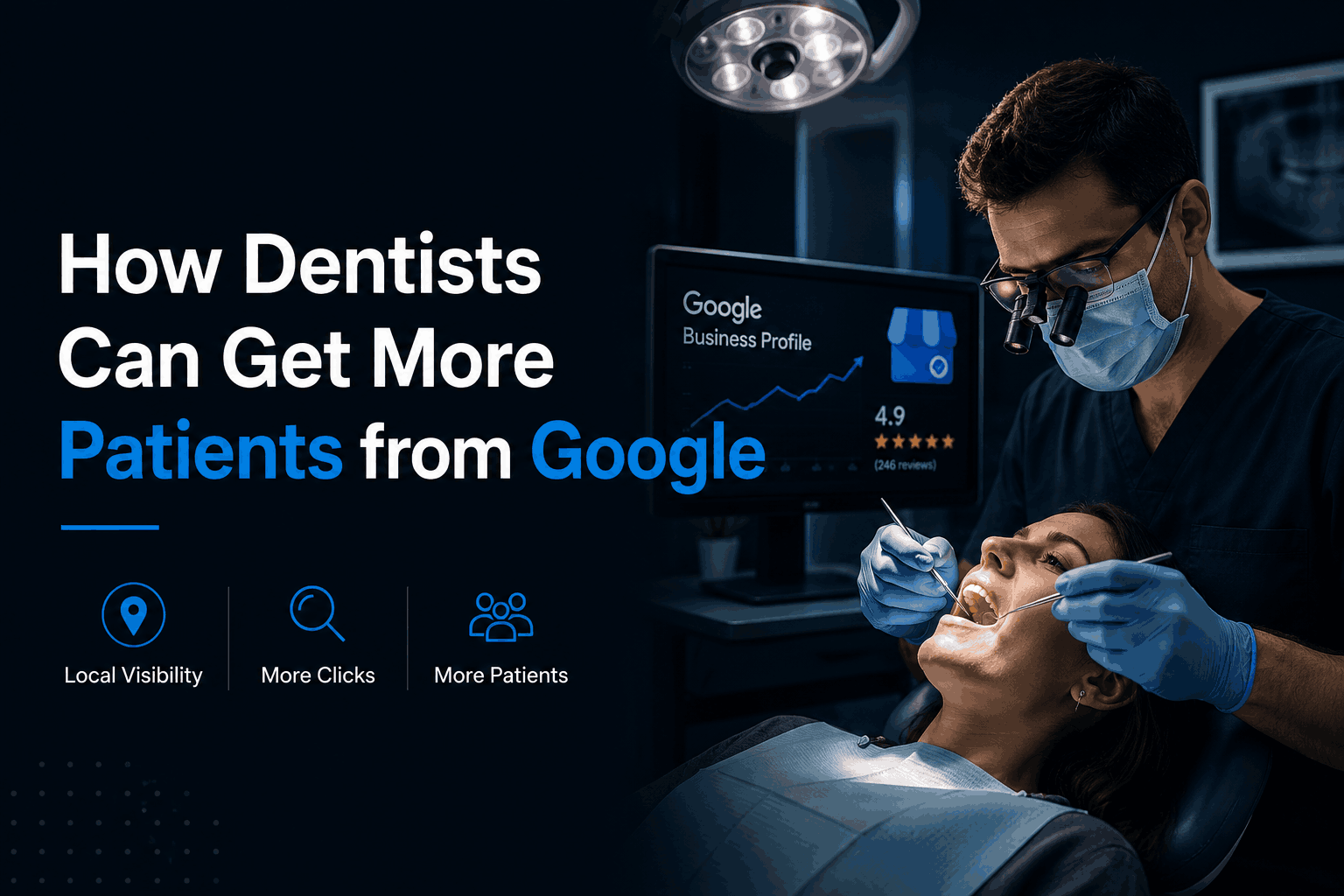
How Dentists Can Get More Patients from Google
1. Rank in Google's local map results for procedure and location terms.

2. Complete and actively manage the Google Business Profile.

3. Collect patient reviews consistently, and respond to every one.

4. Build a dedicated page for each procedure offered.

5. Publish content that answers real patient questions.

6. Run local paid ads for high-intent searches.

7. Track every new patient back to its original source.
Rank in Local Search Results
Local SEO puts your practice in front of patients searching right now. Terms like “emergency dentist near me” or “teeth whitening [city]” carry strong intent, since the searcher usually wants an appointment within days.
Google ranks dental practices using relevance, distance, and prominence. A complete profile, consistent business details across the web, and strong reviews all raise prominence, which directly affects your position in the map pack.
Procedure-specific pages outrank one general services page. A page built specifically for “dental implants” ranks better for that term than a single page listing every procedure in one short paragraph. Each page should explain what the procedure involves, who it suits, and what to expect.
Complete and Optimize the Google Business Profile
A fully completed profile ranks higher and converts better. List every procedure and service offered, upload real photos of the office and team, keep hours accurate, and match your phone number and address exactly with your website.
Google Posts keep the profile active and visible. Regular posts about new patient offers, added services, or office updates signal an active practice, which supports both ranking and click-through rate.
The Q&A and messaging sections reduce friction before booking. Prospective patients often check for insurance acceptance or new patient availability here. Filling this in yourself removes a common reason people search elsewhere.
Collect and Manage Patient Reviews
Review count and rating directly affect local ranking and trust. A practice with 200 reviews at 4.9 stars earns more calls than a competitor with 15 reviews at a similar rating, since volume itself signals reliability.
Ask for a review right after the appointment, not days later. A short text message with a direct review link, sent while the visit is still fresh, gets a far higher response rate than a follow-up email sent a week on.
Respond to every review, especially negative ones. A calm, professional response to a negative review often does more to build trust than the review itself, since it shows prospective patients how the practice handles concerns.
Build Procedure-Specific Pages
A dedicated page for each core procedure targets real search intent. A practice offering implants, whitening, and orthodontics needs three distinct, detailed pages, not one page that briefly mentions all three.
Include details that generic content skips. Cover what the procedure involves, average cost range, recovery time, and who typically needs it. This detail helps both search rankings and a patient’s confidence before they call.
Add FAQ sections to every procedure page. Direct answers to common questions, like “does dental insurance cover implants” or “how painful is a root canal,” help pages rank for long-tail searches and ease patient hesitation.
Publish Content That Answers Real Patient Questions
A practice website with no supporting content misses a large share of search traffic. Patients search questions like “why do my gums bleed when I brush” or “how often should I get a cleaning” long before they search for a specific dentist.
This content builds trust before the first appointment. A patient who finds a clear, helpful answer to their concern on your site is more likely to book with your practice when they’re ready.
Keep the language patient-friendly, not clinical. Explain procedures the way you would to a patient in the chair, since overly technical language pushes readers back to a search results page.
Run Targeted Local Paid Ads
Paid ads capture patients SEO alone cannot reach fast enough. A patient in pain today needs an answer now, and organic rankings take months to build, so paid ads fill that gap while SEO grows.
Call-only campaigns work well for urgent searches. A patient searching “emergency dentist” wants to call immediately, not browse a website, so a click-to-call ad format shortens the path from search to appointment.
Geo-targeting keeps spend focused on real prospective patients. Limiting ads to your actual service radius, rather than an entire city, reduces wasted spend and improves lead quality.
Track Every New Patient Source
Call tracking numbers reveal which channel actually drives new patients. Assign a unique tracking number to organic search, paid ads, and the Google Business Profile, so decisions rely on real data, not guesswork.
Ask new patients directly how they found the practice. A simple question at check-in, paired with call tracking data, gives a fuller picture of which efforts are working.
Review this data monthly. Monthly tracking catches a drop in one channel early, before it costs a full quarter of missed new patient appointments.
Frequently Asked Questions
How long does it take to see results from dental SEO?
Local ranking improvements often begin within two to three months. Stronger results, especially for competitive procedure terms, typically take four to six months, depending on the local market.
Are paid ads or SEO better for getting new dental patients?
Both work well together. Paid ads deliver immediate patients for urgent, high-intent searches. SEO builds a steady, lower-cost patient flow over time. Most practices benefit from running both at once.
How many reviews does a dental practice need to rank well?
There is no fixed number, but consistency matters more than volume alone. A steady flow of new reviews over time signals an active, trustworthy practice better than a large batch collected all at once.
Do I need a separate page for every procedure I offer?
Yes, for core procedures that patients actively search for, like implants, whitening, or orthodontics. A dedicated, detailed page for each outperforms one combined services page in search rankings.
Can AI search tools like ChatGPT send patients to a dental practice?
Yes, increasingly. Patients now ask AI tools for local dentist recommendations. Clear, fact-based procedure pages and consistent business details across the web improve the chances of a practice getting mentioned in those AI-generated answers.
Get More Patients From Google With a Proven Strategy
You now know the exact steps that help a dental practice attract more patients from Google, from local SEO and review management to procedure pages and paid ads.
I offer complete SEO Service as well as GEO services for dental and healthcare practices, covering local rankings, content strategy, and lead tracking. My work includes hands-on execution, not just a list of recommendations.
Contact me today. Share your website URL. I will send back a clear list of what is holding your new patient numbers back, and how to fix it.