 By
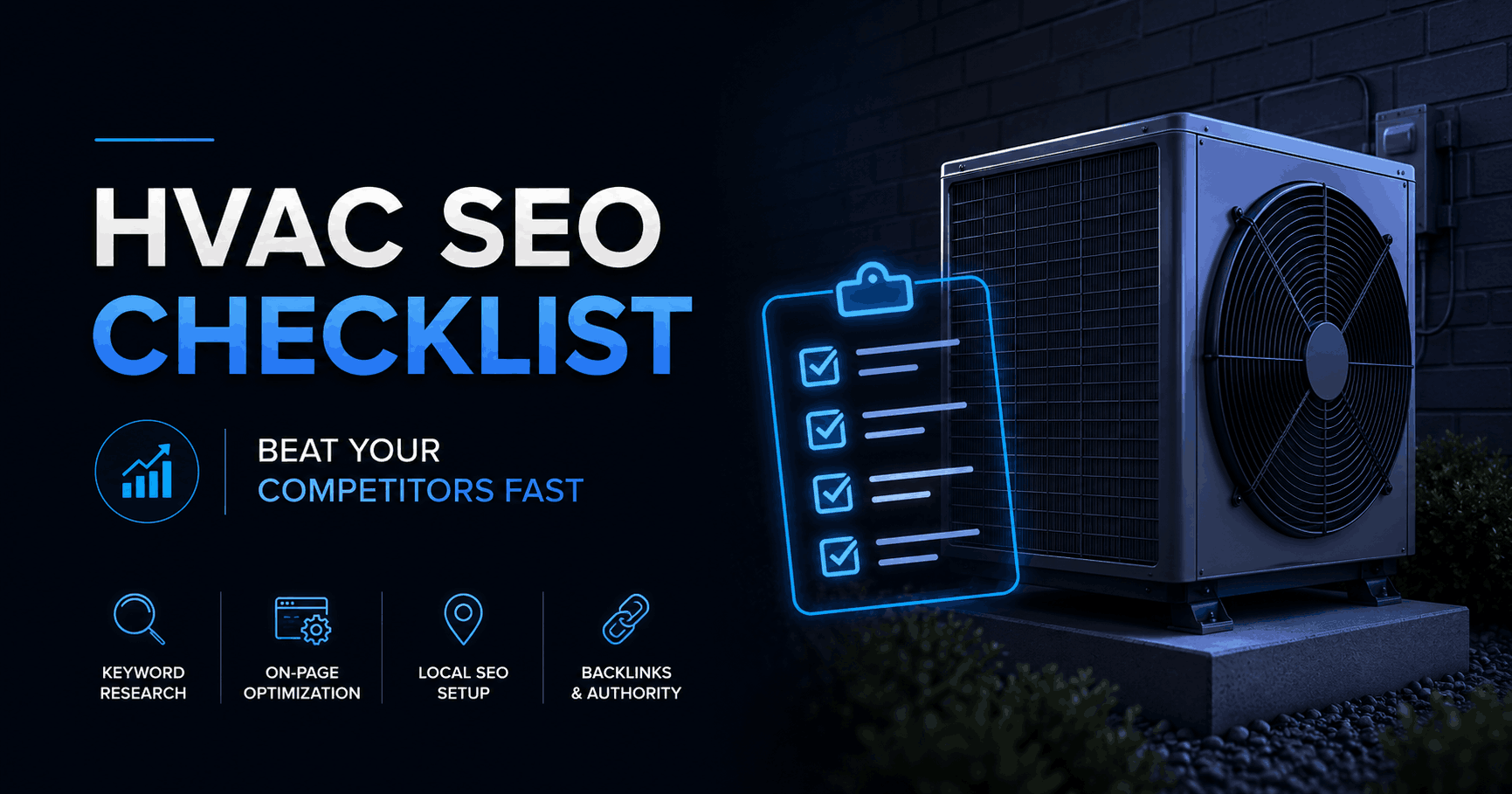
ByThis checklist covers every step an HVAC company needs to rank higher in Google, get found by local customers, and turn website visitors into booked jobs. Work through each section in order. Skipping the foundation steps weakens every step that follows.
Over the years, I have worked extensively with various home service businesses to improve their local search rankings, develop targeted content strategies, and resolve complex technical fixes. Below is the exact, step-by-step checklist I use to consistently drive leads and SEO results for my HVAC clients.
HVAC SEO Checklist – Quick Overview
1. Claim and optimize your Google Business Profile.

2. Fix technical issues that block search engines.

3. Build service and location pages for every offer and area.

4. Collect and respond to customer reviews.

5. Earn backlinks from trusted local and industry sites.

6. Track rankings, traffic, and calls every month.
Step 1: Google Business Profile
Claim your Google Business Profile and fill in every field. Add your business name, phone number, address, service area, hours, and categories. Incomplete profiles rank lower than complete ones.
Choose accurate primary and secondary categories. Select “HVAC Contractor” as your primary category, then add secondary categories like “Air Conditioning Repair Service” and “Furnace Repair Service” if they match your actual work.
Add photos of real jobs, your team, and your vehicles. Profiles with recent, genuine photos earn more clicks than profiles with stock images or no images at all.
Post updates on your profile monthly. Seasonal offers, completed jobs, and service reminders keep your profile active, which Google rewards with better local visibility.
List every service you offer, not just your main ones. Add AC repair, furnace installation, duct cleaning, and maintenance plans as separate services inside your profile, so Google can match you to more search terms.
Step 2: Technical SEO Foundation
Check your site loads in under three seconds. Slow websites lose visitors and rank lower, since Google measures page speed as a direct ranking factor.
Confirm your site works correctly on mobile devices. Most HVAC searches happen on a phone during an emergency, so a broken or hard-to-use mobile site costs you real leads.
Fix broken links and missing pages. Run a site crawl to find 404 errors, then redirect or repair them, since broken pages waste your site’s authority and frustrate visitors.
Install an SSL certificate, if you have not already. A secure site (https) is a baseline trust signal for both visitors and Google’s ranking systems.
Submit your sitemap to Google Search Console. This helps Google find and index every page on your site faster, especially new service and location pages.
Step 3: Service and Location Pages
Create one dedicated page for each core service. Build separate pages for AC repair, furnace repair, installation, maintenance plans, and duct cleaning, instead of combining them into one general page.
Create one page for each city or area you serve. A company serving five towns needs five location pages, each with unique content about that specific area, not five copies of the same text.
Answer real customer questions directly on each page. Include pricing ranges, response times, and what the service involves, since specific answers convert better than vague marketing language.
Add your phone number and a clear call-to-action on every page. A visitor should never need to search for how to contact you, especially during an emergency repair search.
Include schema markup for local business and services. Structured data helps Google display your ratings, hours, and services directly in search results, which increases your click-through rate.
Step 4: Reviews and Reputation
Ask every satisfied customer for a Google review. A steady stream of new reviews signals to Google that your business is active and trusted by real customers.
Respond to every review, positive and negative. A thoughtful response to a negative review shows future customers how your business handles problems, and it signals activity to Google.
Keep your review count and rating visible on your website. Display your Google rating and a few strong testimonials on your homepage and service pages, since social proof increases conversions directly.
Monitor reviews on other platforms too. Yelp, Angi, and Facebook reviews also influence how customers and search engines judge your reputation, not just Google.
Step 5: Local Backlinks and Citations
List your business on major directories with consistent details. Your name, address, and phone number must match exactly across Google, Yelp, Angi, and other directories, since inconsistent listings confuse search engines.
Get listed on local chamber of commerce and trade association sites. These links carry real local authority and rarely require paid placement.
Partner with suppliers and manufacturers for backlinks. Many HVAC equipment brands list authorized dealers and installers on their websites, which gives you a relevant, trustworthy backlink.
Sponsor local events or teams for natural link opportunities. Local news sites and community pages often link back to sponsors, which builds authority tied to your actual service area.
Step 6: Tracking and Reporting
Set up Google Search Console and Google Analytics. These free tools show your rankings, organic traffic, and visitor behavior, giving you the real data behind your SEO progress.
Track phone calls and form submissions by source. Call tracking numbers show exactly which pages and channels produce real leads, not just website visits.
Review rankings for your top keywords monthly. Track terms like “AC repair [city]” and “furnace installation near me” to see whether your position improves over time.
Compare month-over-month and year-over-year data. HVAC demand shifts by season, so a fair comparison looks at the same month last year, not just last month.
Common HVAC SEO Mistakes to Avoid
Using one generic page for all services and all cities. This confuses both customers and search engines about what you actually offer and where you actually work.
Ignoring mobile users. Most emergency HVAC searches come from a phone, so a mobile-unfriendly site turns away your highest-intent customers.
Buying cheap, unrelated backlinks. Links from irrelevant or spammy sites can hurt your rankings instead of helping them, since Google devalues low-quality link sources.
Neglecting reviews after the job is done. A satisfied customer who never leaves a review is a missed opportunity that competitors are capturing instead.
Frequently Asked Questions
How long does HVAC SEO take to show results?
Most HVAC companies see meaningful ranking movement within three to six months, depending on current site authority, local competition, and how completely this checklist gets followed.
What is the single most important step on this checklist?
A complete, active Google Business Profile, since it directly controls your visibility in local map results, where most HVAC searches convert into calls.
Do I need a location page for every town I service, even small ones?
Yes, if you genuinely serve that town and want to rank there. A dedicated page with real, specific content outperforms a single page that lists towns without detail.
How often should I update my HVAC SEO checklist items?
Review your Google Business Profile and reviews weekly. Check technical health and rankings monthly. Refresh location and service page content at least twice a year.
Can I complete this checklist myself, or do I need an SEO consultant?
A hands-on owner can complete the basics, like the Google Business Profile and reviews. Technical fixes, content strategy, and backlink building usually move faster and perform better with an experienced consultant.
Get Your HVAC SEO Checklist Handled for You
You now have every step needed to rank your HVAC business higher in Google and local search.
I offer complete SEO services for HVAC and home service companies, covering technical fixes, Google Business Profile optimization, service and location pages, and local link building. My work includes hands-on execution, not just a list of recommendations.
Contact me today. Share your website URL. I will send back a clear list of what is holding your rankings back, and how to fix it.