 By
ByYour ad spend went up last quarter. Your local customer count did not.
Here, I am giving you a direct set of actions. Each one brings local customers to your business through search, maps, and AI tools, not paid clicks.
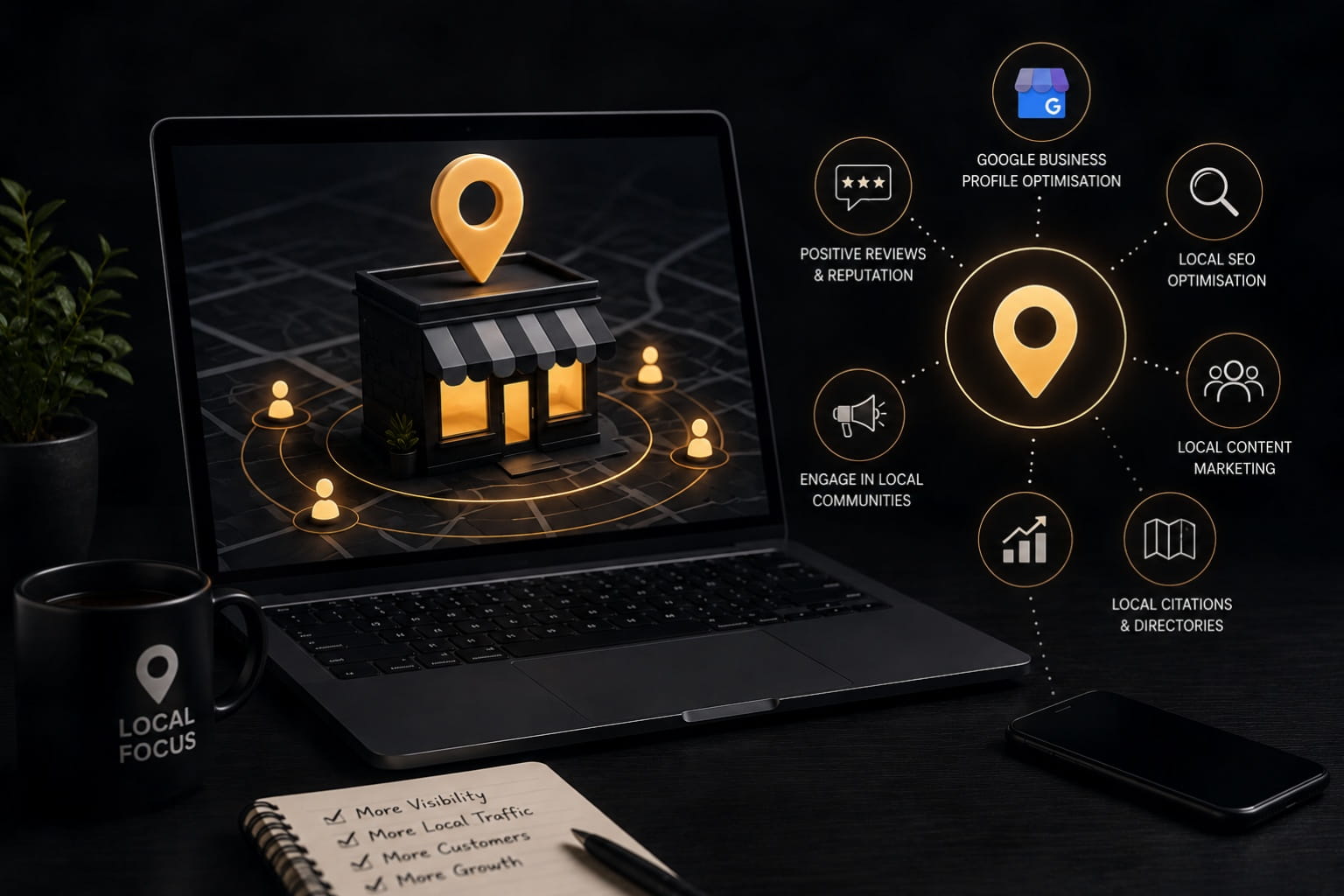
Local customers find businesses through Google Maps, Google Search, and AI tools like ChatGPT. Free visibility across all three sources reduces your dependence on ads. This article shows you how to build that visibility.
Why Ad Spend Alone Stops Working
Paid ads stop bringing new customers the moment you stop paying. Every competitor in your area bids on the same keywords, which pushes your cost per click higher each year.
Free local visibility works differently. A well-optimised Google Business Profile keeps bringing customers long after you set it up. A local page that ranks in search keeps working every month, without a daily budget.
The goal is not to abandon ads. The goal is to build free customer channels that reduce how much ad spend you need.
Step 1: Fix Your Google Business Profile First
Your Google Business Profile shows up before your website, in most local searches. A weak profile loses customers before they ever reach your site.
Complete every section of your profile:
- Business name, exactly as it appears on your storefront and legal documents.
- Category, set to the most specific option, not a broad one.
- Hours, updated for holidays and special events.
- Services or products, listed with clear names and short descriptions.
- Photos, added monthly, showing your location, staff, and work.
Google ranks complete profiles above incomplete ones. This single fix often brings the fastest increase in local calls and visits.
Step 2: Collect Reviews on a Fixed Schedule
Reviews affect two things at once. They raise your Google Maps ranking, and they convince a new customer to choose you over a competitor.
Ask every satisfied customer for a review, right after you finish the job or sale. Send a direct link through text or email. Do not wait for customers to leave a review on their own, since most will not.
Reply to every review, positive or negative. A reply shows future customers that your business stays active and responsive, which builds trust before they even contact you.
Set a target, such as five new reviews each month. Consistent reviews outperform a single batch of ten reviews collected once and never repeated.
Step 3: Build Location Pages That Match Real Searches
A single homepage cannot rank for every neighbourhood or suburb you serve. Build a separate page for each location, with content specific to that area.
Each location page should include:
- The area name, in the page title and first paragraph.
- Local landmarks or neighbourhoods your customers recognise.
- A direct answer to what you offer in that area.
- Reviews or a case study from a customer in that location, where available.
Avoid copying the same page for each area and changing only the city name. Search engines and AI tools detect duplicate content, and duplicate pages rank worse than a single strong page.
Step 4: Get Listed and Mentioned Across Local Sources
Google, Gemini, and ChatGPT check more than your own website before they trust your business. They check whether other local sources confirm your name, address, and service.
Build these mentions in order of impact:
- Local business directories, specific to your city or industry.
- Chamber of commerce and local association listings, if you qualify.
- Local news mentions, through small stories, sponsorships, or events.
- Partner and supplier websites, that list you as a service provider.
Each mention confirms your business is real, active, and based where you claim. This proof raises your ranking in Google Maps and your citation rate in AI search tools.
Step 5: Answer the Questions Local Customers Actually Ask
Local customers type specific questions into Google and ChatGPT, such as “plumber open now near me” or “best dentist for kids in [city].”
List the real questions your customers ask before they book or buy. Use your phone calls, walk-ins, and online chat history as your source.
Write a direct answer to each question on your website, in one or two sentences, followed by supporting detail. This format matches how AI search tools scan for answers, which raises your chance of getting shown or cited.
Step 6: Turn Existing Customers into a Referral Channel
A referral customer costs nothing in ad spend and trusts your business before the first call. Most local businesses get referrals by accident, instead of by design.
Ask directly. After a successful job, say: “If you know someone who needs this, send them my way.” Add a referral mention to your invoice, email signature, or thank-you message.
Offer a small, clear incentive, such as a discount on a future service, for both the referrer and the new customer. A simple, repeated ask outperforms a complex referral program that customers forget to use.
Free Local Visibility vs Paid Ads Comparison
| Factor | Free Local Visibility | Paid Ads |
|---|---|---|
| Cost after setup | Low, mainly time | Ongoing, per click |
| Result once stopped | Continues working | Stops immediately |
| Trust with new customers | High, built on reviews and proof | Lower, seen as an ad |
| Time to first result | Weeks to a few months | Immediate |
| Best use | Long-term, compounding growth | Short-term, urgent demand |
Most local businesses need both. Ads fill gaps quickly. Free visibility builds a customer base that keeps growing without added spend.
A Quick Local Visibility Self-Check
Answer these five questions about your business.
- Is every section of your Google Business Profile complete?
- Did your business collect new reviews in the last month?
- Does your website have a dedicated page for each area you serve?
- Does your business name, address, and phone number match exactly across every listing?
- Do you have a direct, repeated way to ask happy customers for referrals?
A “no” answer to any question marks a gap in your free local visibility. Close that gap before you increase your ad budget.
Frequently Asked Questions
How long does local SEO take to bring in customers?
Most businesses see early movement in Google Maps rankings within four to eight weeks, once the Google Business Profile is complete and reviews start coming in. Location pages and directory listings usually take two to three months to show full impact.
Can I stop running ads once local SEO works?
Most businesses reduce ad spend rather than stop completely. Free visibility handles steady, ongoing demand. Ads still help during slow periods or when you launch a new service.
Do I need a location page for every area, even small ones?
Build a location page only for areas that bring in real search volume or existing customers. A thin page for a low-demand area can hurt more than help.
What matters more, reviews or the number of directory listings?
Reviews carry more weight for local ranking and customer trust. Directory listings still matter, since they confirm your business details across the web, but reviews should come first.
Does this work for service-area businesses without a storefront?
Yes. Google Business Profile supports service-area businesses directly. Location pages, reviews, and directory listings work the same way, with your service area listed instead of a walk-in address.
Build Local Growth That Does Not Depend on Ad Spend
You now have six steps: a complete Google Business Profile, a steady review flow, real location pages, outside mentions, direct answers to real questions, and a working referral system.
Most local business owners know these steps matter but lack the time to execute all six, plus track which ones bring in customers.
I build local SEO and GEO strategies for businesses that want steady local customer growth without a growing ad bill. My process includes a full local visibility audit, Google Business Profile optimisation, location page content, review system setup, and monthly ranking reports.
Contact me today. Tell me your business name and city. I will show you exactly where your local visibility gaps sit, and the fastest way to close them.