 By
ByTechnical SEO fixes how search engines crawl, index, and read your website. On-page SEO improves the content and elements on each individual page, like titles, headings, and body copy. Both services work on the same website, but they solve different problems. A site with strong content and broken technical foundations still fails to rank, and a technically clean site with weak content fails just as often.
I provide both technical SEO and on-page SEO services for e-commerce stores, educational institutions, and law firms. Here I explain exactly how these two services differ, where they overlap, and which one your website needs first.
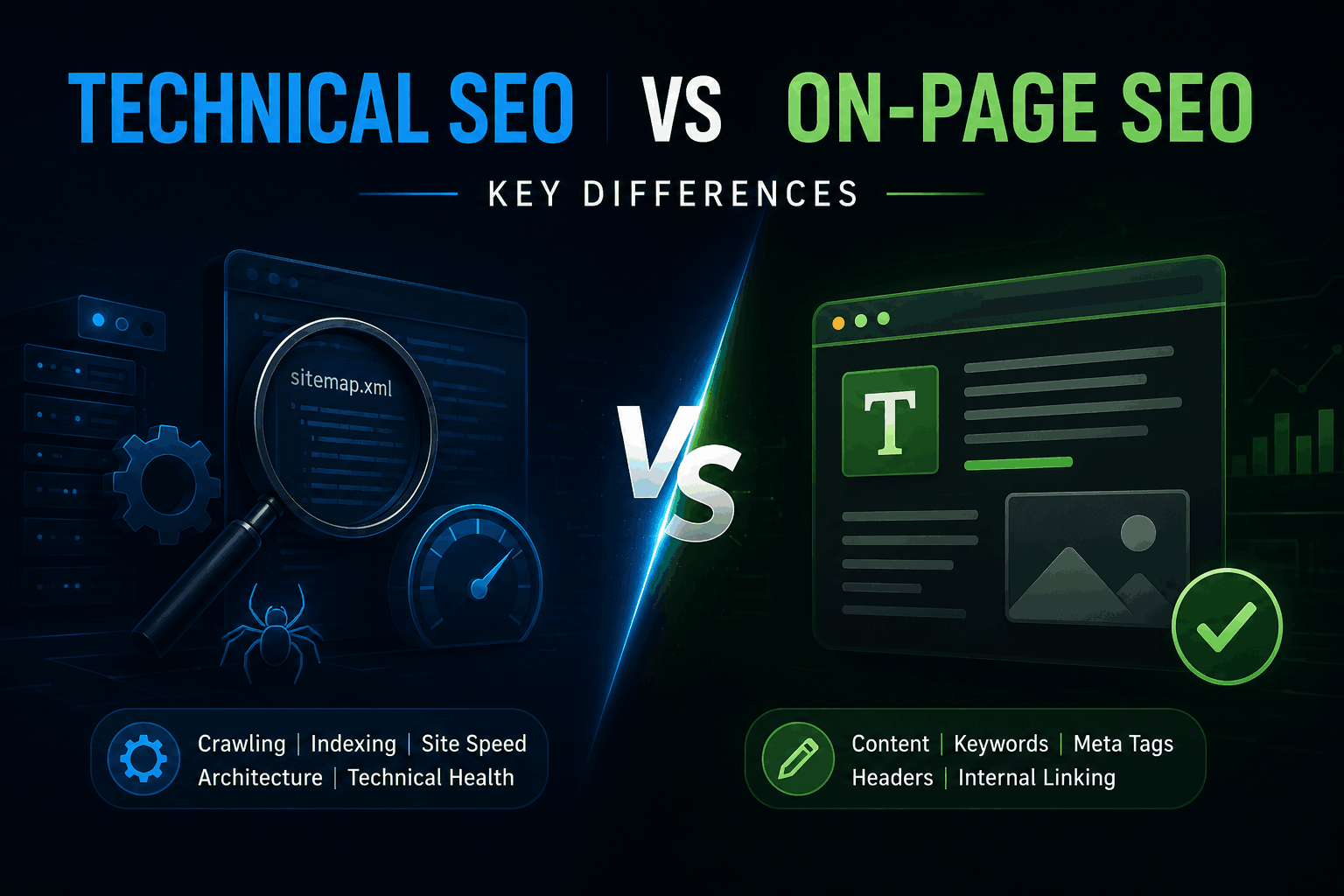
Technical SEO vs On-Page SEO – Core Differences
1. Technical SEO controls how search engines crawl and index your site. On-page SEO controls how relevant and useful each page looks to search engines and readers.

2. Technical SEO fixes site-wide issues, like speed, crawlability, and structure. On-page SEO fixes page-specific issues, like titles, headings, and content quality.

3. Technical SEO work happens mostly in code, server settings, and site architecture. On-page SEO work happens mostly in content, copy, and on-screen elements.

4. Technical SEO problems often block rankings completely. On-page SEO problems usually limit rankings, without blocking them outright.

5. Both services support the same goal: helping search engines find, understand, and rank your pages correctly.
What Technical SEO Services Cover
Technical SEO makes your website accessible to search engines. It includes crawlability, indexability, site speed, mobile usability, secure connections, and clean URL structure. If Google cannot crawl or index a page correctly, that page cannot rank, regardless of how good the content is.
Technical SEO fixes issues that affect the entire site at once. A slow server, broken redirects, duplicate content, or a missing XML sitemap can hold back every page on your website, not just one.
Technical SEO includes structured data and schema markup. This code helps search engines understand what a page is about, like a product, an article, or a service, and it helps your listing display extra details on the search results page.
Technical SEO requires ongoing monitoring. Search engines update their crawling and indexing behavior often, so a technical audit needs regular repeats, not a single one-time fix.
What On-Page SEO Services Cover
On-page SEO improves the content and structure of individual pages. It includes keyword placement, title tags, meta descriptions, header tags, internal linking, and image optimization, all aimed at making one page more relevant to a specific search query.
On-page SEO focuses on matching search intent. A page ranks well when its content directly answers what the searcher wants, so on-page work often includes rewriting or expanding content to close that gap.
On-page SEO includes internal linking between related pages. Strong internal links help search engines understand page relationships and help readers find related content, which keeps them on the site longer.
On-page SEO changes page by page. A product page, a blog post, and a service page each need different on-page treatment, since their purpose and target keywords differ.
Where Technical SEO and On-Page SEO Overlap
Both services aim to help search engines understand your content correctly. Technical SEO makes a page readable to crawlers, while on-page SEO makes the content inside that page clear and relevant.
Both services affect page speed and user experience. Technical fixes, like image compression and code cleanup, and on-page choices, like content length and formatting, both shape how fast and how easy a page feels to use.
Both services support the same keyword strategy. Technical SEO ensures a page targeting a keyword actually gets crawled and indexed. On-page SEO ensures that same page’s content genuinely matches the keyword’s intent.
Both services rely on structured data. Technical SEO installs schema markup correctly in the code. On-page SEO ensures the content that schema describes is accurate and complete.
Where Technical SEO and On-Page SEO Diverge
Technical SEO works site-wide. On-page SEO works page-by-page. A single technical fix, like resolving a crawl error, can improve rankings across hundreds of pages at once. On-page improvements apply to one page at a time and need repeating across the site.
Technical SEO requires developer-level skills. On-page SEO requires content and keyword skills. Fixing server response times or canonical tags often needs code changes. Improving a page’s title tag or content depth needs research and writing skills instead.
Technical SEO problems can block indexing entirely. On-page SEO problems rarely do. A blocked page returns zero rankings, regardless of content quality. A weak on-page page still gets indexed; it simply ranks lower or fails to match the right search intent.
Technical SEO gets audited less often. On-page SEO gets updated more often. A technical audit typically happens quarterly or after major site changes. On-page content often needs regular updates to stay accurate and competitive.
Do You Need Technical SEO or On-Page SEO First?
Start with technical SEO if your site has crawl or indexing problems. Check Google Search Console for crawl errors, indexing issues, or manual actions. Content improvements cannot help a page Google cannot find.
Move to on-page SEO once your site is technically healthy. If your pages get crawled and indexed correctly but still rank low, the content itself likely needs improvement to match search intent.
Run both together for a new website. A new site benefits from a technical foundation and strong on-page content from launch, rather than fixing one after the other causes delays.
Reassess both after major traffic drops. A sudden ranking drop can come from a technical issue, like a broken redirect after a site migration, or a content issue, like outdated information. Checking both quickly narrows down the cause.
How to Choose the Right SEO Service for Your Website
Ask for a technical audit before any content work begins. A qualified SEO provider checks crawlability, indexing, and site speed first, since content improvements on a broken site produce limited results.
Ask how they prioritize fixes. A genuine SEO provider ranks issues by impact, fixing crawl-blocking errors before smaller on-page tweaks, rather than treating every task as equally urgent.
Ask for examples of before-and-after results. Real technical SEO work shows measurable indexing and speed improvements. Real on-page work shows ranking and traffic improvements for specific pages.
Check whether they explain issues in plain language. A provider who can describe a canonical tag problem or a content gap clearly, without jargon, usually understands the work well enough to fix it correctly.
Frequently Asked Questions
Which matters more, technical SEO or on-page SEO?
Neither works well without the other. Technical SEO gets your pages found and indexed. On-page SEO makes those pages relevant enough to rank once found. Skipping either one limits results.
Can I do on-page SEO myself and hire someone for technical SEO?
Yes, this split works for many site owners. On-page SEO involves content and keyword decisions you may know well. Technical SEO often needs developer access and coding knowledge, which makes it a common task to outsource.
How often does a website need a technical SEO audit?
Most sites benefit from a technical audit every three to six months, plus an additional check after any major site change, like a redesign or platform migration.
Does on-page SEO include writing new content?
Yes. On-page SEO often includes rewriting existing content, adding missing sections, and creating new pages to fill content gaps that match what searchers are looking for.
Can poor technical SEO undo good on-page SEO work?
Yes. A page with excellent content can still fail to rank if it loads slowly, blocks crawlers, or has indexing errors. Technical problems limit how far on-page improvements can go.
Get Complete Technical and On-Page SEO for Your Website
You now know exactly how technical SEO and on-page SEO differ, where they overlap, and which one your website needs first.
I offer complete SEO services, covering technical audits, site speed, schema markup, content optimization, and keyword strategy. My work includes hands-on fixes, not just a list of recommendations.
Contact me today. Share your website URL. I will send back a clear list of what is holding your rankings back, technically and on-page, and how to fix it.