 By
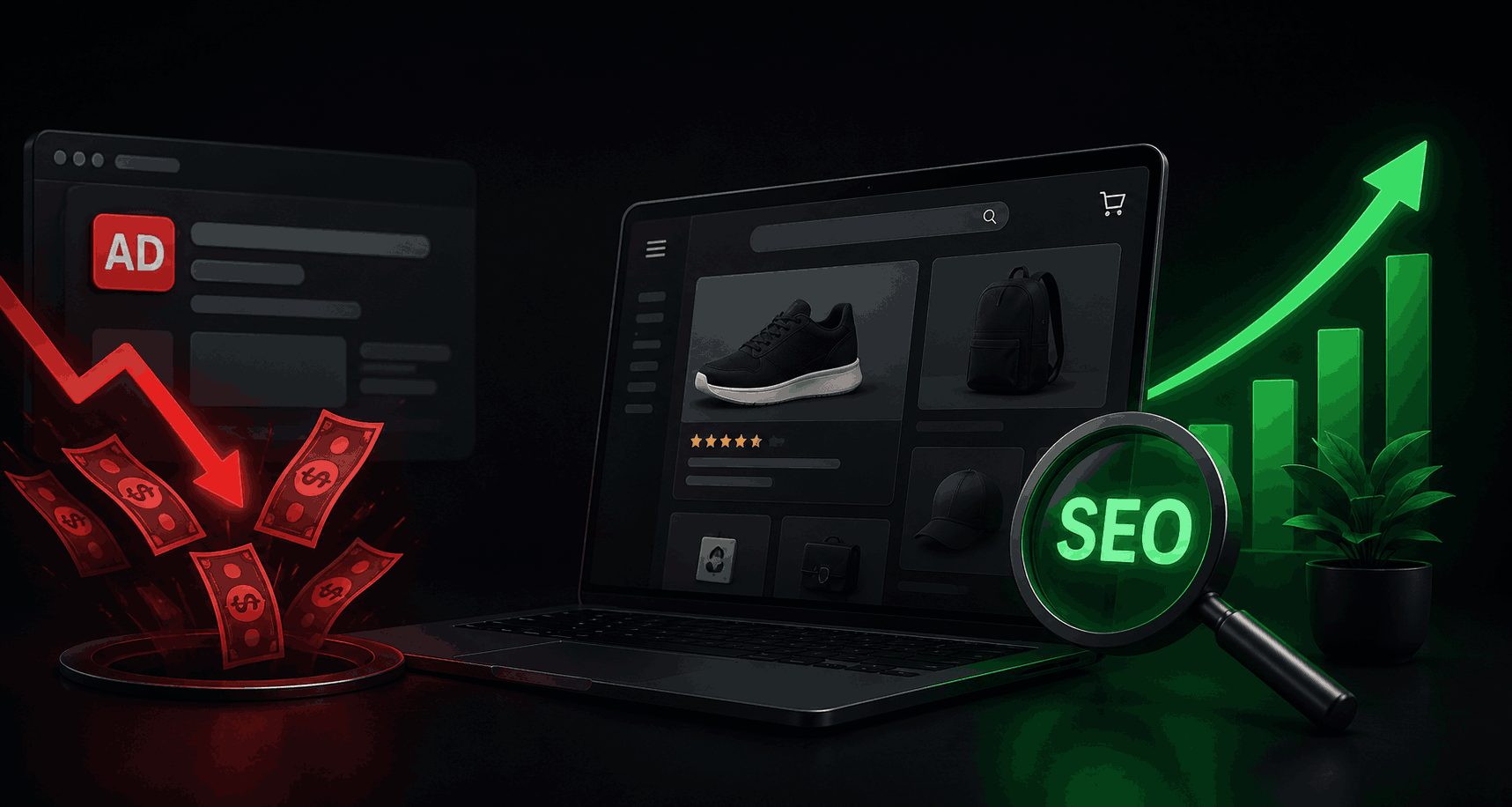
ByYes. SEO can cut your paid ad spend, often by a large margin, once your store starts ranking for the terms that drive sales.
I am Prabir Mandal, an SEO and GEO specialist. I work with ecommerce stores that rely too heavily on Google Ads and Meta Ads to bring in traffic. Every month without SEO is a month spent renting visibility instead of owning it.
Paid ads stop the moment you stop paying. SEO traffic keeps arriving after the work is done. This article shows you how to shift your eCommerce store from one to the other, without losing sales during the transition.
Why Paid Ad Spend Keeps Rising
Google Ads and Meta Ads auctions get more expensive every year. More stores bid on the same keywords and the same audiences, so each click costs more than it did last year.
Cost per click rises with competition. As more sellers enter your category, the auction price for your best keywords climbs, even if your product and offer stay the same.
Ad platforms reward constant spend. The moment you pause a campaign, your traffic drops to zero. Nothing carries over. No history, no ranking, no ongoing visibility.
Margins shrink as spend grows. A product that earned a healthy profit at a five-dollar cost per click earns far less once that cost doubles. Many ecommerce stores now spend more on ads than they keep in profit.
SEO breaks this cycle. A page that ranks well keeps bringing traffic for months or years, without a daily bidding war.
How SEO Traffic Replaces Paid Traffic
SEO does not remove the need for paid ads overnight. It reduces your dependence on them over time, page by page.
Product pages capture ready-to-buy searches. A shopper who searches your exact product name or model number already wants to buy.
A well-optimised product page wins that sale without a single ad dollar spent.
Category pages capture broad buying intent. Shoppers who search a product type, such as “wireless earbuds under 2000,” land on a strong category page instead of a paid listing, if that page ranks.
Blog and guide content capture research-stage searches. Shoppers who search “best running shoes for flat feet” are not ready to buy yet, but they are close. Content built around this stage builds trust before the shopper reaches your product page.
Reviews and comparison pages capture decision-stage searches. Shoppers who search “[Product A] vs [Product B]” are close to a final decision. A page that answers this question directly often earns the sale.
Each of these page types replaces a paid ad campaign that would otherwise chase the same shopper at the same stage.
Ecommerce SEO Actions That Cut Ad Spend Fastest
Some SEO work pays back within weeks. Other work builds slowly and pays back over months. Start with the fast wins, then build the slower foundation underneath them.
Fix your product page titles and descriptions. Most ecommerce product pages use short, generic titles that ignore real search terms. Rewrite each title to match the exact phrase a buyer types into Google, and expand the description to answer common buyer questions.
Add schema markup to every product page. Product schema shows your price, stock status, and star rating directly in Google search results. This markup increases your click-through rate without touching your ad budget.
Fix crawl errors and broken links. A store with hundreds of broken links and error pages loses ranking strength across the whole site. A technical cleanup often lifts traffic within four to six weeks.
Build category pages around real search volume. Many stores organise categories by internal logic instead of by what shoppers actually search. Rename and restructure categories to match real search terms, and traffic follows.
Target long-tail keywords first. A term like “leather laptop bag for men 15 inch” has less competition than “laptop bag,” and it converts at a higher rate because the shopper knows exactly what they want.
Speed up your site. A slow product page loses both ranking and sales. Compress images, remove unused scripts, and use a fast hosting setup built for ecommerce traffic.
Ecommerce SEO vs Paid Ads: A Direct Comparison
| Factor | Ecommerce SEO | Paid Ads |
|---|---|---|
| Cost over time | Drops as pages rank and compound | Stays constant or rises with competition |
| Traffic after spend stops | Continues | Stops immediately |
| Time to first result | Four to twelve weeks | Same day |
| Trust with buyers | Higher, seen as an organic result | Lower, seen as a paid placement |
| Best role | Long-term traffic and profit growth | Fast traffic for new launches and gaps |
Most stores that grow steadily use both. SEO builds the base. Ads fill short-term gaps and support new product launches.
A 90-Day Plan to Shift Spend from Ads to SEO
Weeks 1 to 2: Audit your top twenty product pages and fix titles, descriptions, and missing schema markup.
Weeks 3 to 4: Fix technical errors flagged in Google Search Console, including broken links, slow pages, and missing metadata.
Weeks 5 to 8: Rebuild your category pages around real keyword data, and publish four guide articles that target research-stage searches.
Weeks 9 to 12: Track ranking movement and organic traffic weekly. Reduce ad spend on the keywords where your SEO pages now rank on page one.
After 90 days: Compare your cost per sale from ads against your cost per sale from organic traffic. Most stores see a clear gap by this point, and reallocate ad budget toward SEO for the next quarter.
Frequently Asked Questions
Can ecommerce SEO fully replace paid ads?
Rarely, and not immediately. SEO reduces how much you depend on ads, especially for your best-selling products and categories. Most successful stores keep a smaller, more targeted ad budget alongside strong SEO.
How long does it take to see lower ad spend from SEO?
Most ecommerce stores see early ranking movement within four to eight weeks on product pages, and stronger results within three to six months on category and content pages.
Which pages should I optimise first?
Start with your highest-revenue product pages and your most expensive ad keywords. These give the fastest return once they start ranking organically.
Does GEO, or AI search visibility, also reduce ad spend?
Yes. As more shoppers ask ChatGPT, Gemini, and AI Overviews for product recommendations, a store cited in those answers gains free visibility that paid ads cannot buy. Structured, fact-based content built for SEO also supports AI citation.
Is SEO cheaper than paid ads overall?
Over a full year, most ecommerce stores pay less per sale through SEO than through ads, once pages rank. The setup work costs time and, often, a specialist fee, but the traffic keeps arriving after that work ends.
Get a Clear Plan to Cut Your Ad Spend
You now know how SEO replaces paid traffic, page by page, and which actions pay back fastest for an ecommerce store.
I work with ecommerce brands that want to reduce ad dependence without losing sales during the shift. My process includes a full audit of your product and category pages, a prioritised action plan, and hands-on execution, including GEO for AI search visibility.
Contact me today. Tell me your store name and current ad spend. I will show you exactly which pages can start replacing that spend, and how soon.