 By
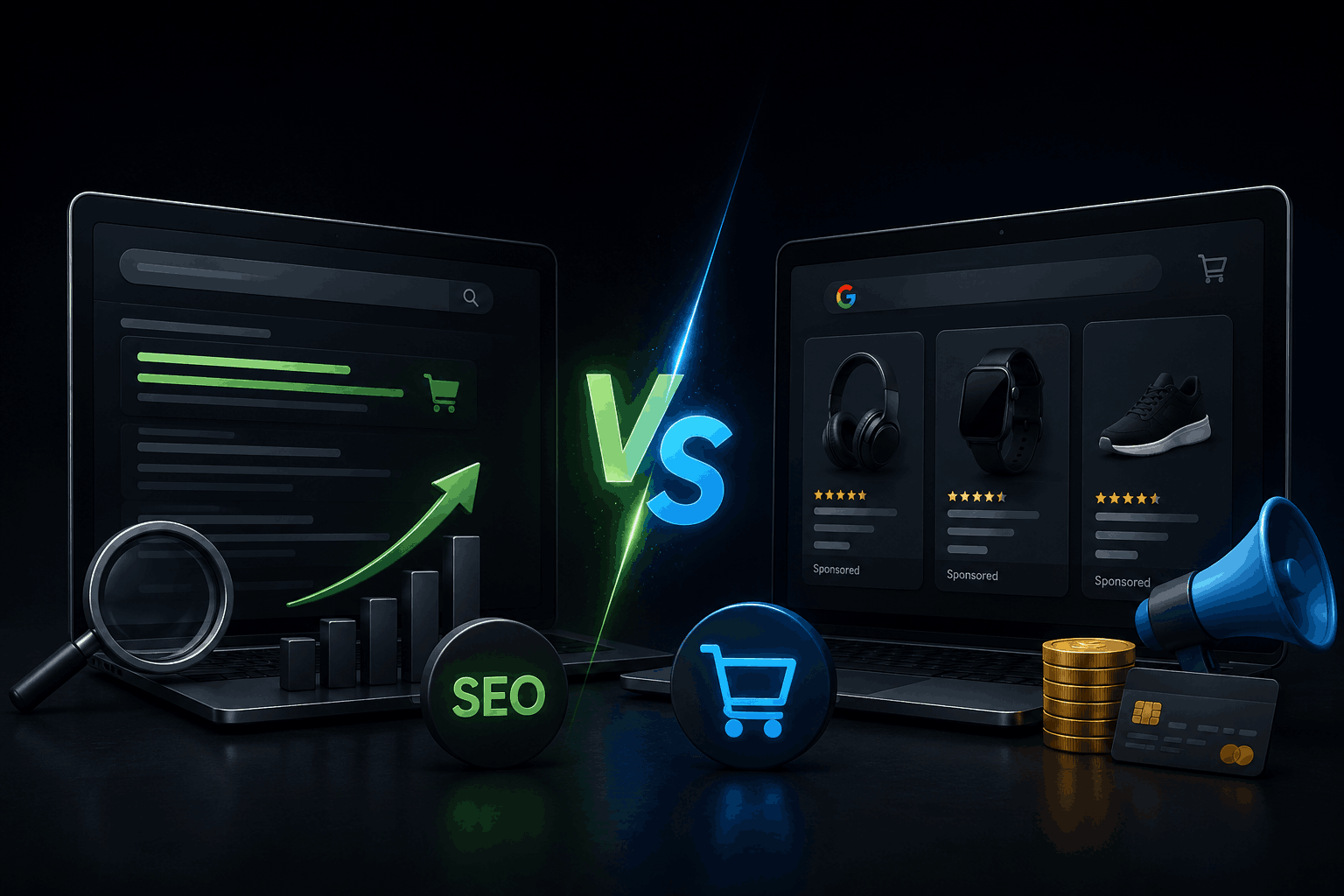
ByEcommerce SEO builds free, lasting traffic through organic rankings. Google Shopping Ads buy instant traffic through paid product listings. Most stores need both, but at different stages of growth.
I am Prabir Mandal, an SEO and GEO specialist. I work with ecommerce stores that split their budget between organic growth and paid campaigns.
Let’s compare the both channels directly, so you can decide where your next rupee or dollar should go.
Ecommerce SEO builds free, lasting organic traffic through better rankings. Google Shopping Ads buy instant traffic through paid listings, but stop the moment spend stops. SEO costs less over time and keeps working; Shopping Ads work faster for new launches. Most stores need both, shifting budget toward SEO as rankings grow.
What Ecommerce SEO Actually Does
SEO improves your product pages, category pages, and content so Google ranks them higher in organic search results, without payment.
SEO targets every stage of the buyer journey. A shopper researching options, comparing products, or ready to buy all use different search terms. SEO content can capture all three stages across separate pages.
SEO traffic compounds over time. A product page that ranks well in month three often keeps ranking in month twelve, without new spend. The traffic adds up instead of resetting each month.
SEO builds trust with buyers. Shoppers click organic results more often than paid ones, since an organic ranking signals relevance rather than a paid placement.
SEO takes time to show results. Most stores see early movement within four to eight weeks, and stronger results after three to six months.
What Google Shopping Ads Actually Do
Google Shopping Ads show your product image, price, and store name directly in search results, funded through a paid bidding system.
Shopping Ads deliver traffic immediately. A campaign can go live today and bring in clicks within hours, unlike SEO, which needs time to build ranking strength.
Shopping Ads work well for new product launches. A brand-new product has no ranking history, so Shopping Ads fill that visibility gap while SEO builds up in the background.
Shopping Ads stop the moment spend stops. Pause the campaign, and the traffic disappears immediately. Nothing carries forward to the next month.
Shopping Ads cost rises with competition. As more stores bid on the same product category, cost per click climbs, often faster than sales volume grows.
Ecommerce SEO vs Google Shopping Ads Comparison
| Factor | Ecommerce SEO | Google Shopping Ads |
|---|---|---|
| Time to first traffic | Four to eight weeks | Same day |
| Cost after month one | Drops as pages rank | Stays constant or rises |
| Traffic after spend stops | Continues | Stops immediately |
| Buyer trust | Higher, seen as organic | Lower, seen as paid |
| Best for | Long-term growth, profit margin | New launches, fast promotions |
| Setup effort | Higher, ongoing | Lower, but needs constant management |
| Scalability | Limited by content and site strength | Limited by budget |
When Google Shopping Ads Make More Sense
A brand-new store with no organic history. SEO has nothing to build on yet, so Shopping Ads bring in early sales while pages start ranking.
A time-limited sale or seasonal push. A festival sale or clearance event needs traffic now, not traffic that arrives in two months.
A new product with no search demand yet. Shoppers cannot search for a product they do not know exists. Shopping Ads create visibility that SEO cannot generate on its own.
When Ecommerce SEO Makes More Sense
A store with steady, recurring products. Products that sell month after month benefit from a ranking that keeps working without new spend each time.
A store trying to protect profit margins. As ad costs rise, a store that depends only on Shopping Ads sees margins shrink. SEO traffic carries a lower cost per sale over time.
A store planning for the next twelve months, not the next week. SEO rewards patience. A store willing to invest three to six months sees a channel that keeps paying back long after the work is done.
How to Combine Both for Better Results
Most successful ecommerce stores do not choose one channel. They combine both, based on the product and the stage of growth.
Use Shopping Ads to test new products. Run a short paid campaign to confirm demand before investing in SEO content for that product.
Use SEO data to improve Shopping Ads. Keyword research done for SEO often reveals the exact search terms shoppers use, which sharpens your Shopping Ads targeting too.
Shift spend as SEO rankings grow. Once a product page ranks well organically, reduce Shopping Ads spend on that exact keyword, and redirect the budget toward a newer product that still needs paid visibility.
Track cost per sale across both channels. Compare what each sale costs you through SEO against what it costs through Shopping Ads. This comparison shows you where to invest next.
Frequently Asked Questions
Can Google Shopping Ads replace ecommerce SEO?
No. Shopping Ads work only while you pay for them. SEO builds a separate asset that keeps working after the campaign ends, and the two serve different goals.
Should a new store start with SEO or Shopping Ads?
Most new stores start with Shopping Ads for immediate sales, and build SEO in parallel, since SEO needs time before it shows results.
Does ranking well in SEO reduce Shopping Ads cost?
Yes, in most cases. Once a product ranks organically, fewer buyers rely on the paid listing to find it, which can lower your cost per click and cost per sale over time.
How much budget should go to each channel?
This depends on store age and cash flow. A new store often puts more budget into Shopping Ads early, then shifts a larger share toward SEO as organic rankings build.
Does GEO, or AI search visibility, affect this comparison?
Yes. As shoppers use ChatGPT, Gemini, and AI Overviews to research products, a store with strong SEO and structured content gains free visibility that Shopping Ads cannot buy in these channels.
Get a Channel Strategy Built for Your Store
You now know how ecommerce SEO and Google Shopping Ads work, where each one fits, and how to combine them without wasting budget.
I help ecommerce stores build a channel plan that balances paid traffic today with organic traffic that keeps growing. My work includes SEO audits, content strategy, and GEO for AI search visibility.
Contact me today. Tell me your current split between SEO and Shopping Ads. I will show you where to shift your next budget for the best return.