 By
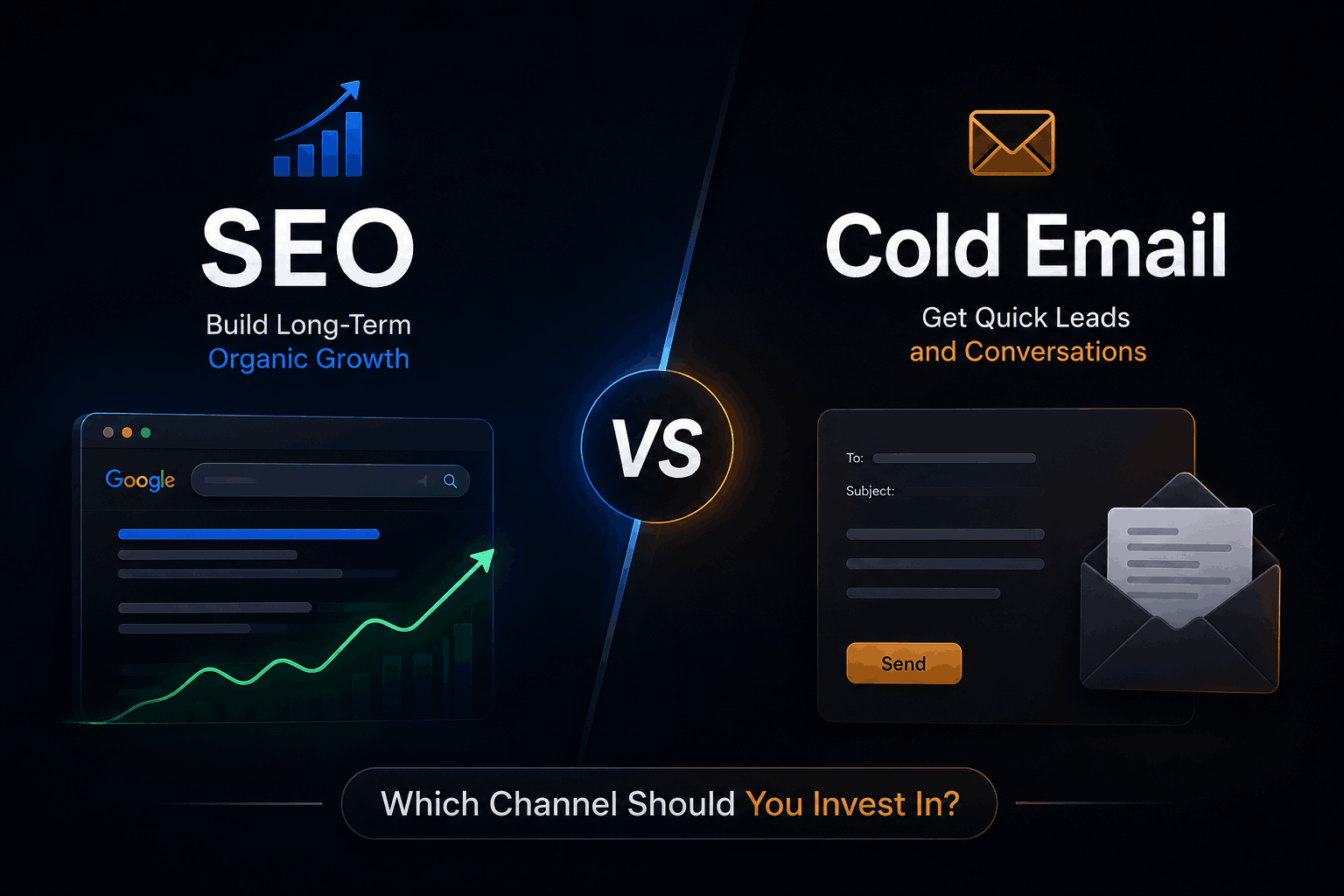
BySEO brings potential customers to you through search engines. Cold email sends your message directly to potential customers, whether they searched for you or not. SEO takes months to build but keeps generating leads with little added cost. Cold email produces leads within days but requires constant, ongoing sending to sustain results. Most businesses need both, at different stages of growth.
I work with businesses that rely on one channel, the other, or both together. Here is exactly how SEO and cold email compare, and how to decide which one to prioritize first.
SEO vs Cold Email – Key Differences
1. SEO attracts people already searching for your product or service. Cold email reaches people who have not expressed any interest yet.

2. SEO takes three to six months to show meaningful results. Cold email can produce replies and meetings within the first week.

3. SEO costs stay largely fixed once your content and rankings are in place. Cold email costs scale directly with the number of prospects you contact.

4. SEO builds an asset that keeps working after you stop active investment. Cold email stops producing results the moment you stop sending.

5. SEO depends on content quality and technical site health. Cold email depends on list quality, message relevance, and deliverability.
What SEO Does for Your Business
SEO makes your business visible when someone searches for what you offer. A person typing “accounting software for small business” already has intent. SEO puts your business in front of that intent at the exact moment it exists.
SEO builds compounding value over time. A blog post or service page ranking on page one keeps bringing in visitors month after month, without added spend, once it reaches that position.
SEO requires patience before it pays off. New content typically needs weeks to get indexed and months to reach a competitive ranking, so SEO rarely produces fast, short-term results.
SEO depends on your website’s overall health. Page speed, mobile usability, and technical structure all affect whether your content can rank, regardless of how good the content itself is.
What Cold Email Does for Your Business
Cold email puts your offer directly in front of a chosen prospect. You control exactly who receives your message, based on job title, company size, industry, or any other criteria you choose.
Cold email produces fast, measurable results. A well-targeted campaign can generate replies and booked meetings within days of the first send, unlike SEO’s slower timeline.
Cold email requires ongoing volume to sustain results. Reply rates typically sit in the low single digits, so consistent lead flow depends on contacting new prospects continuously.
Cold email carries deliverability risk. Sending too many emails too fast, or emailing outdated lists, can damage your domain’s sending reputation and hurt your regular business email in the process.
Where SEO and Cold Email Overlap
Both channels depend on a clear, specific offer. A vague pitch performs poorly whether it appears in an email inbox or a search result, since the reader needs to understand the value immediately.
Both channels benefit from research into your actual customer. Keyword research for SEO and prospect research for cold email both start from the same question: what does this person actually need?
Both channels need consistent tracking to improve. Open rates and reply rates guide cold email improvements. Rankings and click-through rates guide SEO improvements. Neither channel improves without measurement.
Where SEO and Cold Email Diverge
SEO is passive. Cold email is active. SEO waits for the customer to search. Cold email goes directly to the customer, whether they were looking or not.
SEO scales without added outreach effort. Cold email scales only with added volume. A ranking page serves unlimited visitors at no extra cost. Cold email requires new prospects and new sends to reach new people.
SEO builds trust before first contact. Cold email builds trust during first contact. A visitor who finds you through search already trusts Google’s ranking. A cold email recipient has no prior signal and decides trust from your message alone.
SEO has a longer payback period. Cold email has a shorter one. Money spent on SEO content may take months to return value. Money spent on a cold email campaign can return value within the same month.
Which Channel Should You Choose First?
Choose cold email first if you need revenue quickly. New businesses, or businesses testing a new offer, benefit from cold email’s speed, since it produces conversations and feedback almost immediately.
Choose SEO first if you plan to operate for years, not months. Businesses with an established offer benefit more from SEO’s long-term, compounding return, since the investment keeps paying off well after the work is done.
Run both together once you have the budget. Cold email generates immediate leads while SEO content builds in the background, so revenue does not depend entirely on one channel.
Match the channel to your sales cycle. A high-value, considered purchase, like enterprise software, often benefits from cold email’s direct, personal approach. A commonly searched product or service often benefits more from SEO’s ability to capture existing demand.
How to Combine SEO and Cold Email Effectively
Use SEO content to support your cold email campaigns. A prospect who receives a cold email and then finds your ranking blog post or case study gains extra confidence in your legitimacy before replying.
Use cold email data to guide your SEO content. Questions and objections that come up repeatedly in email replies reveal exactly what your prospects want to read, which becomes strong material for new content.
Track both channels in the same place. Route leads from SEO and cold email into one CRM, so you can compare cost per lead and close rate across both channels directly.
Frequently Asked Questions
Is SEO better than cold email?
Neither is better in every case. SEO works best for long-term, compounding growth. Cold email works best for fast, targeted outreach. The right choice depends on your timeline and budget.
Can cold email hurt my SEO?
Not directly. The two channels operate independently. Poor email practices can hurt your domain’s email deliverability, but this does not affect your website’s search rankings.
How much does cold email cost compared to SEO?
Cold email typically costs less upfront but requires continuous spend to sustain volume. SEO often costs more upfront in content and technical work but reduces cost per lead significantly once rankings are established.
How long before cold email stops working?
Cold email keeps working as long as you maintain list quality, message relevance, and sending practices. Results decline when lists go stale or messaging stops matching what prospects actually need.
Should a new business start with SEO or cold email?
Most new businesses should start with cold email, since it generates faster feedback and revenue. SEO investment should begin in parallel, so rankings are building by the time cold email’s returns start to plateau.
Get an SEO Strategy That Compounds Alongside Your Outreach
You now know exactly how SEO and cold email compare, where they overlap, and how to combine them for faster, more sustainable growth.
I offer complete SEO services, covering technical fixes, content strategy, and keyword-targeted pages built to compound over time. My work includes hands-on execution, not just a list of recommendations.
Contact me today. Share your website URL. I will send back a clear list of what is holding your organic visibility back, and how to fix it.