 By
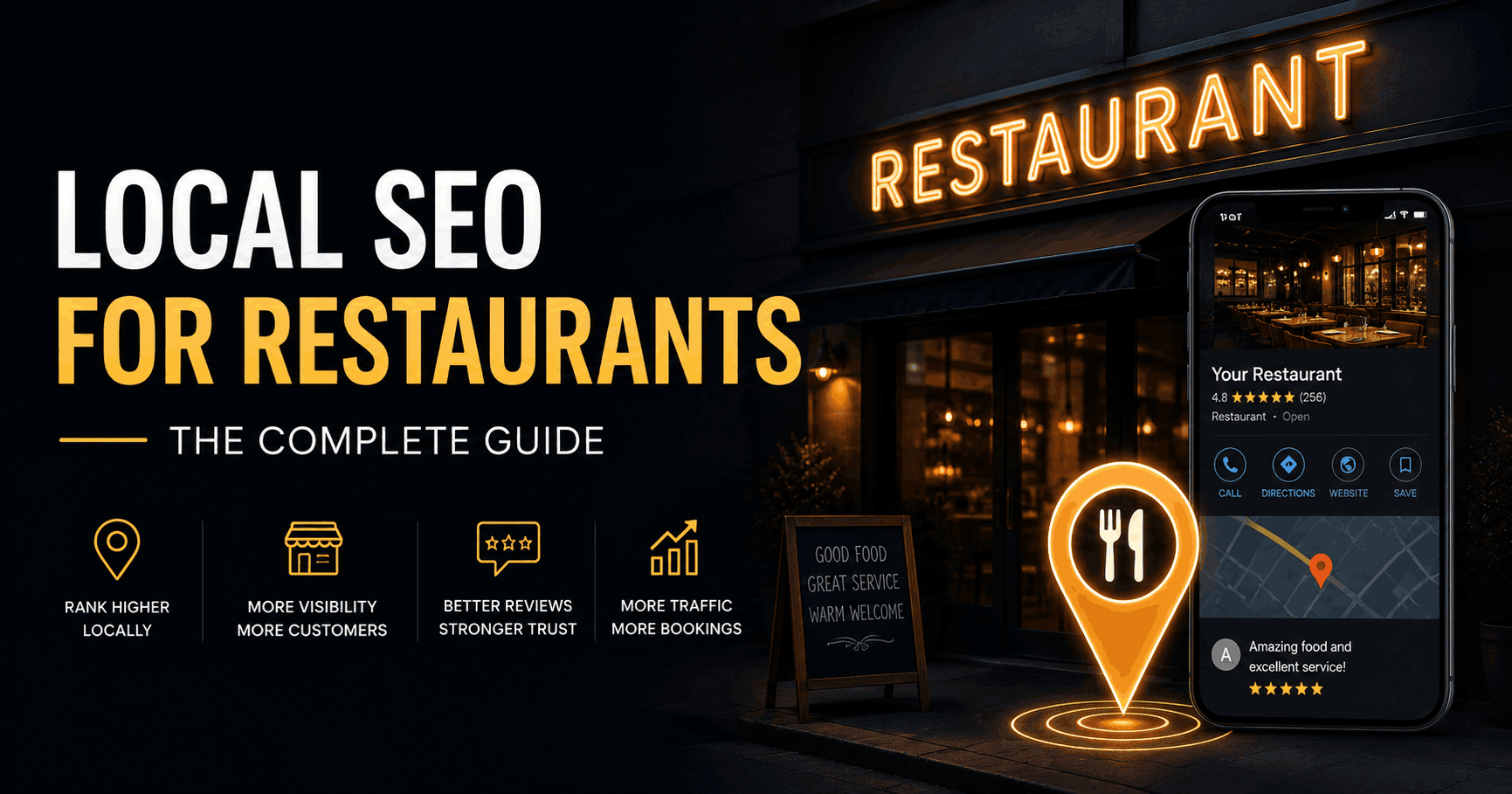
ByLocal SEO gets your restaurant found by hungry customers searching “restaurants near me” or “best Italian food in [city].” It combines your Google Business Profile, your website, and your online reviews into one system that ranks your restaurant higher in local search results and on Google Maps. A restaurant with strong local SEO gets found first, before a competitor with better food but weaker visibility.
As an experienced SEO and GEO Specialist, I have worked with restaurants and food service businesses to build local search visibility that turns searches into table bookings and orders. Here is exactly what local SEO for restaurants includes, and how to do it correctly.
Why Local SEO Matters for Restaurants
Most diners choose a restaurant based on a nearby search, not a brand they already know. A search for “brunch near me” or “pizza delivery [city]” pulls up a short local list, and most people pick from that first screen without scrolling further.
Google Maps drives as many decisions as the website itself. Diners check star ratings, photos, and distance directly inside Maps, often before they ever click through to a restaurant’s own site.
Local SEO costs less than paid ads over time. Once your Google Business Profile and website rank well, they keep generating visibility without a per-click fee, unlike a paid search campaign that stops the moment spend stops.
Google Business Profile Optimization
Claim and verify your Google Business Profile first. This one listing controls how your restaurant appears in Google Search and Google Maps, including your hours, menu, photos, and reviews.
Fill in every available field completely. Add your exact address, phone number, website link, hours, price range, cuisine type, and attributes like “outdoor seating” or “delivery available,” since Google rewards complete profiles with better visibility.
Upload real, current photos regularly. Interior shots, dish photos, and photos of your team perform better than stock images, and profiles with fresh photos receive more clicks and direction requests.
Post updates through Google Posts. Share new menu items, events, or promotions directly on your profile, since active profiles signal relevance to Google’s local ranking system.
Respond to every review, positive and negative. A reply shows future customers, and Google, that your restaurant stays engaged with feedback.
On-Site Local SEO for Your Restaurant Website
Add your restaurant’s name, address, and phone number to every page. This information, called NAP, needs to match your Google Business Profile exactly, since inconsistent details confuse Google’s local ranking algorithm.
Create a dedicated location page for each restaurant address. A multi-location restaurant group needs one unique page per location, each with its own address, hours, menu link, and embedded map.
Build your menu as real text, not only as an image or PDF. Google cannot read menu items inside an image file, so a text-based menu page helps your restaurant rank for specific dish searches, like “best ramen [city].”
Add schema markup for your restaurant. Structured data tells Google your business type, price range, hours, and menu directly, which can produce rich results like star ratings inside the search listing.
Keep your site fast and mobile-friendly. Most restaurant searches happen on a phone, often while someone stands outside deciding where to eat, so a slow-loading site loses that customer immediately.
Local Content That Ranks
Write pages around real local search terms. Target phrases like “best brunch spot in [neighborhood]” or “[city] rooftop restaurant,” since these match how actual customers search, rather than generic terms like “fine dining.”
Publish content tied to your neighborhood. A blog post about a local food festival, a nearby event, or a seasonal menu update signals relevance to both search engines and the local community.
Add an FAQ section to your main pages. Answer real questions like “do you take reservations” or “is there parking nearby,” since these direct answers often appear in Google’s featured snippets.
Keep your blog focused on food and location, not filler. Recipes, ingredient stories, and behind-the-scenes content perform well when they connect back to your specific restaurant and location.
Reviews and Reputation
Ask satisfied customers for reviews directly. A simple request at the end of a meal, or a follow-up text with a review link, produces far more reviews than waiting for customers to leave one on their own.
Focus on Google reviews first. Google reviews carry the most weight for local search rankings, ahead of Yelp, TripAdvisor, or Facebook reviews.
Address negative reviews quickly and professionally. A calm, specific response to a bad review often reassures future customers more than a perfect five-star record with no replies at all.
Monitor review volume and recency. A steady flow of new reviews signals an active, trustworthy business, while a restaurant with only old reviews looks less reliable to both customers and Google.
Local Citations and Directory Listings
List your restaurant on major directories. Yelp, TripAdvisor, OpenTable, and local city guides all reinforce your business details across the web, which strengthens trust with Google’s local algorithm.
Keep your business details identical across every listing. A mismatched phone number or address on even one directory can weaken your local rankings, so an audit of existing listings catches these errors early.
Get listed on local food blogs and news sites. A mention in a “best restaurants in [city]” roundup, or local news coverage, builds real authority that directories alone cannot match.
Frequently Asked Questions
How long does local SEO take to work for a restaurant?
Most restaurants see initial movement in Google Maps rankings within one to three months, with stronger results building over six months as reviews, content, and citations accumulate.
Is Google Business Profile more important than my website for local SEO?
Both matter, but Google Business Profile usually drives the first impression, since it appears directly in Maps and local search results before a customer ever visits your site.
How many reviews does a restaurant need to rank well locally?
There is no fixed number, but review volume, recency, and average rating all factor into local rankings. A steady stream of new reviews matters more than reaching one fixed total.
Do multi-location restaurants need separate local SEO for each site?
Yes. Each location needs its own Google Business Profile and its own website page, with unique address, hours, and content, since Google ranks each location independently.
Can local SEO help with food delivery orders, not just dine-in traffic?
Yes. Strong local SEO increases visibility for delivery-focused searches too, such as “pizza delivery near me,” which drives orders directly through your website or delivery platform links.
Get a Local SEO Strategy Built for Your Restaurant
You now have a complete picture of what local SEO for restaurants involves, from your Google Business Profile to reviews, citations, and on-site content.
I offer complete SEO and GEO services for restaurants and food service businesses, covering Google Business Profile optimization, local content, review strategy, and technical fixes. My work includes hands-on execution, not just a list of recommendations.
Contact me today. Share your restaurant’s website or Google Business Profile. I will send back a clear list of what is holding your local visibility back, and how to fix it.