 By
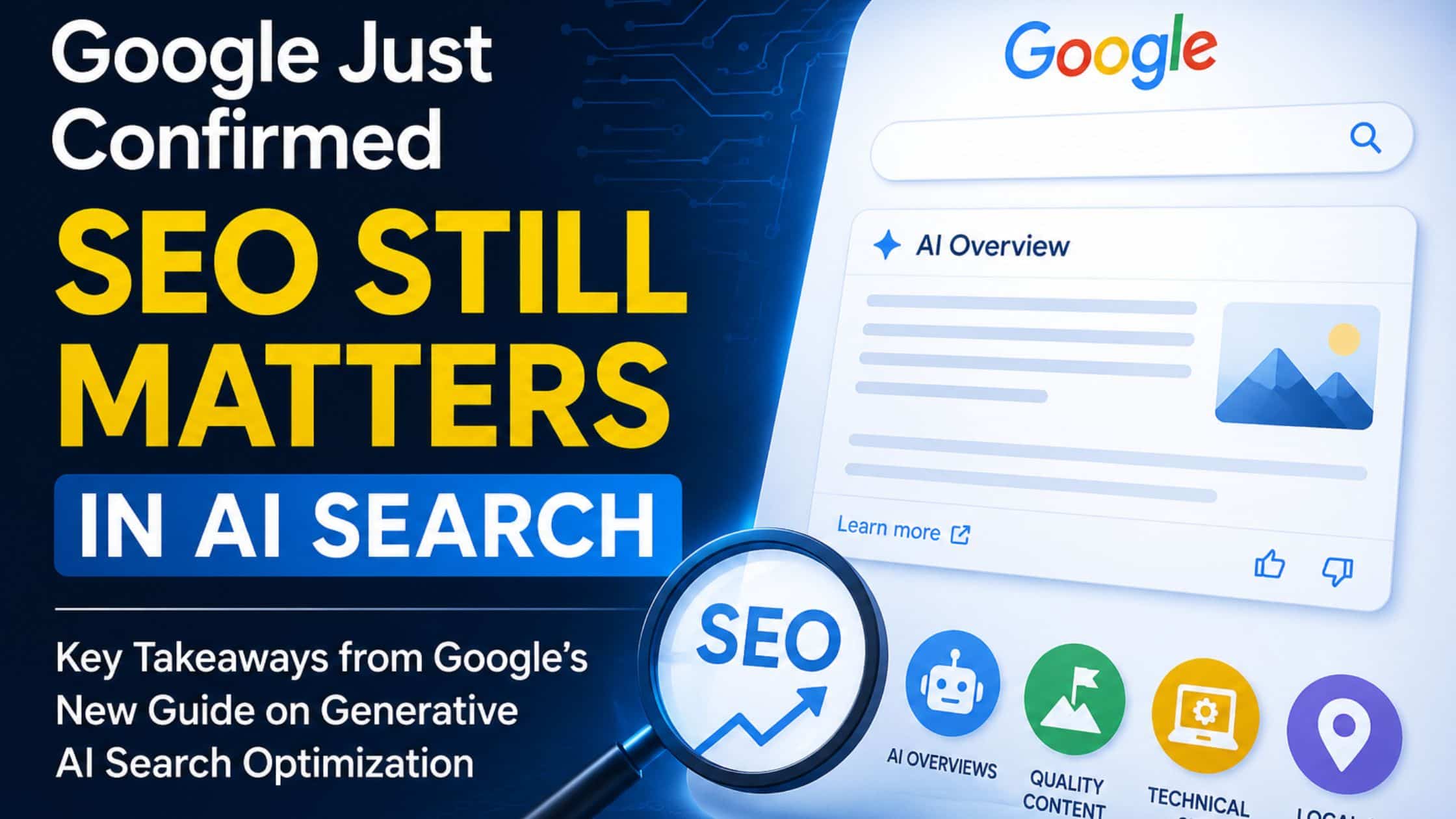
ByGoogle recently published a new guide on how websites can perform better in generative AI search experiences like AI Overviews and AI Mode. The article matters because it gives direct insight into how Google wants websites to create content in the AI search era.
After reading the full guide, one thing became very clear to me:
SEO is still the foundation of visibility in Google Search, even inside AI-generated answers.
Many marketers started pushing terms like AEO and GEO. Some people claimed traditional SEO is dying. Google just rejected that idea in a very direct way.
In this article, I will break down the most important points from Google’s guide and explain what website owners should actually focus on in 2026.
Google Says SEO Still Works for AI Search
Google clearly stated that its AI search features still rely on core Search systems.
That means Google still uses crawling, indexing, ranking systems, relevance signals, and content quality signals. The only major difference is how Google presents the information.
Google explained that AI systems use Retrieval-Augmented Generation (RAG). In simple terms, the AI pulls information from indexed web pages before generating an answer.
Google also uses something called query fan-out. The system expands the original search into many related searches to collect better information.
For example, if someone searches for “How to remove weeds from my lawn,” Google may also search for related topics like the best lawn herbicides, natural weed removal methods, and lawn maintenance tips.
This matters because Google now evaluates content across broader topical relevance instead of relying only on exact keyword matching.
In my opinion, this is one of the biggest reasons why old-school keyword stuffing keeps failing.
Google Wants Original Content, Not Rewritten Content
This was the strongest part of the article.
Google repeatedly emphasized the importance of unique and non-commodity content.
Google wants content that includes real experience, original opinions, first-hand knowledge, unique insights, and clear expertise. Google specifically warned against recycling information that already exists online.
I completely agree with this.
Over the last two years, many websites started mass-producing AI-generated articles with almost identical information. Most of those articles add no value. They simply repeat what other pages already say.
Google’s AI systems are getting much better at identifying this pattern.
I believe websites that survive the AI search shift will be the ones that publish content based on real experience and real expertise.
For example, a generic article titled “7 SEO Tips for Beginners” has less value today. But an article like “How I Increased Organic Traffic by 230% After Fixing Crawl Waste” has a much stronger chance of standing out.
Why?
Because it contains experience-driven information that AI systems cannot easily duplicate.
Google Does Not Want Content Written for AI Systems
This section destroys many current “AI SEO hacks.”
Google clearly said website owners do not need llms.txt files, AI-specific markup, excessive long-tail keyword pages, or rewritten content made specifically for AI crawlers. Google also explained that content does not need to be heavily “chunked” into tiny sections for AI systems to understand it.
This is important because many SEO influencers started selling fear-based advice around AI search optimization.
Google basically confirmed that strong SEO fundamentals still matter more than shortcuts.
Personally, I think many people are overcomplicating AI search optimization.
Good content still wins. Technical clarity still matters. User satisfaction still matters.
That has not changed.
Content Structure Still Matters
Google also highlighted the importance of clear structure.
The company recommended using proper headings, organized sections, easy-to-read formatting, clear paragraphs, and relevant images or videos where appropriate.
This aligns with modern NLP understanding.
Google’s systems now understand topics better than before, but clear structure still improves content interpretation.
I strongly believe that readability has become a major ranking advantage.
Most users skim content first.
If readers cannot quickly understand your page, they leave.
AI systems also benefit from structured information because it helps identify the main topic and supporting points faster.
Technical SEO Still Plays a Major Role
Many people assumed AI search would reduce the importance of technical SEO.
Google confirmed the opposite.
The guide clearly states that pages must remain crawlable and indexable. Websites must also meet Search technical requirements, provide a good page experience, work properly on mobile devices, and handle JavaScript correctly.
Google also mentioned duplicate content issues and crawl budget optimization.
This is important for large websites.
In my experience, many sites fail because they ignore technical problems while focusing only on content production.
AI search does not remove technical SEO.
It increases the importance of clean website architecture.
Google Wants People-First Content
Google repeated the phrase “people-first content” several times.
This is still the core principle behind modern SEO.
The company advised creators to ask one simple question:
“Will visitors find this content satisfying?”
That question matters more than chasing algorithms.
I think this is the right direction for SEO.
Search engines now measure user satisfaction better than before. Google can analyze engagement, click behavior, content usefulness, relevance, and overall experience signals more effectively.
Pages created only to rank often fail over time because users do not actually enjoy them.
Ecommerce and Local SEO Will Benefit from AI Search
Google also explained that AI search experiences may include product listings, local business information, and detailed product data directly inside responses.
This creates more opportunities for e-commerce brands and local businesses.
Google recommended using Google Merchant Center and Google Business Profile to improve visibility in these AI-driven experiences.
Businesses that maintain accurate product information and updated local business details will likely gain more visibility inside AI-generated results.
I believe local SEO will become even more competitive because AI search can directly surface nearby businesses in answers.
My Opinion on the Future of SEO
After reading Google’s full guide, my conclusion is simple:
SEO is evolving, not dying.
The tactics are changing, but the core principles are staying the same.
The websites that will perform best in AI search are the ones that publish original content, demonstrate real expertise, build strong technical foundations, focus on user satisfaction, avoid spam tactics, and create experience-driven content.
Many websites still rely on scaled AI content with no original value. I do not think that strategy will survive long-term.
Google’s AI systems are moving closer to understanding experience, trust, expertise, usefulness, and originality.
That shift will reward creators who genuinely know their subject.
Final Thoughts
Google’s new guide gives website owners a very clear message.
You do not need new AI tricks to succeed in AI search.
You need strong SEO fundamentals combined with useful and original content.
That is still the winning formula.
If your website helps users, answers questions clearly, and provides real value, you are already moving in the right direction for both traditional Search and AI-powered Search.
For me, this update confirms one thing:
The future of SEO belongs to experts, creators, and businesses that bring real experience to the internet.